
October 1, 2026
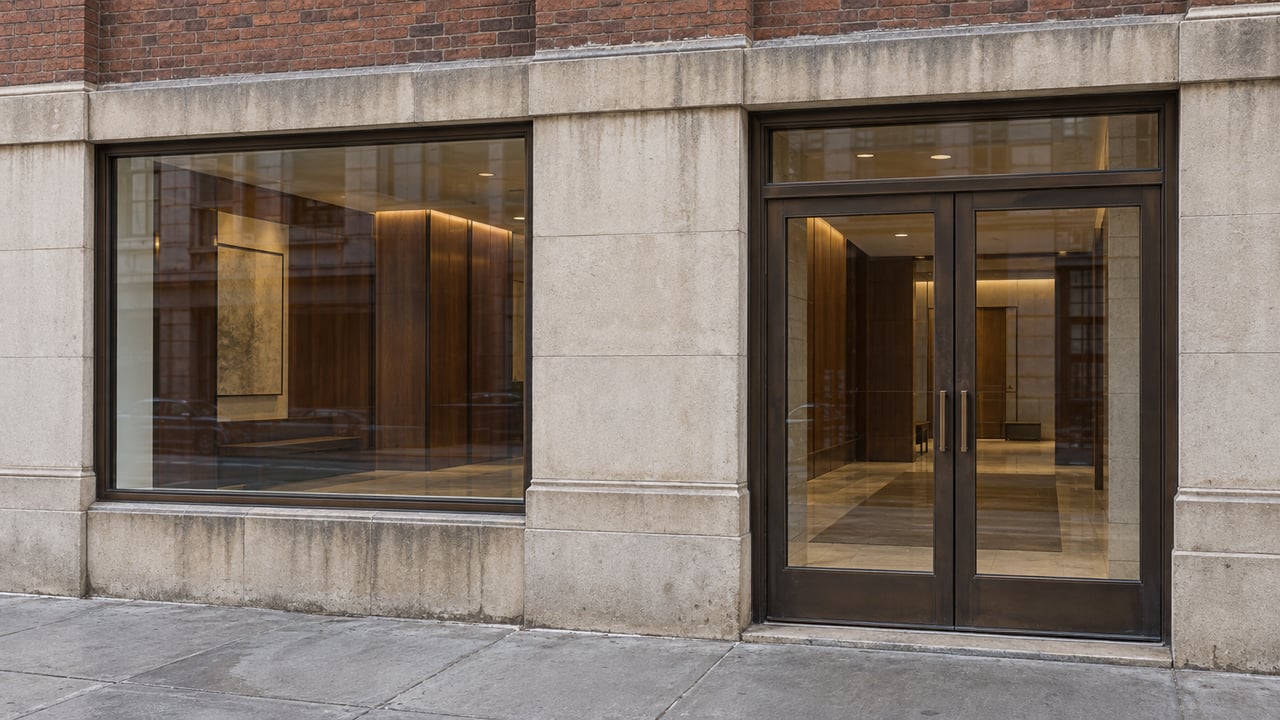
"We're excited to call Flatiron & NoMad home because the neighborhood represents so much of what we love about New York. It's a place where locals, creatives, office workers, visitors, and longtime New Yorkers all cross paths throughout the day."
The Flatiron NoMad Partnership quoted Chris Taha in its August 12 New Neighbor Roundup about the bagel shop he opened at 1235 Broadway this past August. The quote reads like the kind of thing any new restaurant owner says about any neighborhood. What the quote leaves out is the number that matters: Leon's Bagels, founded in Greenwich Village in 2021, was already five locations deep across the city before Taha picked NoMad for the sixth. He wasn't testing a concept. He was extending one that had already worked five times over.
That's the pattern running through almost every notable food opening the Flatiron NoMad Partnership has logged in its own monthly roundups this year, and it's worth naming directly, because it tells you something about the neighborhood that a list of new restaurants by itself doesn't.
The business improvement district that covers this stretch of Manhattan calls itself the Flatiron NoMad Partnership, and it treats both sides of Broadway as a single reporting zone. That's a small but useful piece of context if you live here and have ever wondered where Flatiron stops and NoMad starts on paper: for the organization tracking new business openings, it doesn't. Their "New Neighbor Roundup" posts mix addresses on Fifth Avenue with addresses on Broadway as if they were one continuous strip, which functionally they are for anyone walking it.
What those roundups show, month after month in 2026, is a district that keeps attracting operators with an existing track record rather than first-time restaurateurs betting everything on one storefront.
Sunday Morning, the cinnamon-roll-only bakery that opened at 11 West 25th Street in March, is chef Armando Litiatco and Ahmet Kiranbay's second New York location. Armando had already cooked in San Francisco, Miami, and at Daniel here in the city before he and Kiranbay built their first Sunday Morning elsewhere and decided the second belonged in this district. The pair also runs Rana Fifteen, a Western Turkish restaurant in Brooklyn, which means the cinnamon rolls at 11 West 25th are the work of operators already running two other kitchens successfully.
Felice, the family-run Italian restaurant that took over a space overlooking Madison Square Park at 220 Fifth Avenue in June, describes itself the same way: not a debut, but its newest location. The room has 18-foot ceilings and a 30-foot illuminated wine wall, the kind of buildout a company commits to only when it already knows its menu draws a crowd elsewhere.
Ambassadors Clubhouse, the 150-seat Indian restaurant that opened at 1245 Broadway in March, took the pattern international. It's the New York debut of London's JKS Restaurants, an established restaurant group bringing a concept that already has a following across the Atlantic rather than inventing one from scratch on Broadway.
CHITORI, the izakaya that opened at 37 West 26th Street the same month as Felice, isn't a multi-location chain, but it opened with a kitchen led by Michelin yakitori chefs, meaning the pedigree behind the grill was proven before the restaurant itself existed. UOVO, the Italian spot that opened alongside it, builds its menu around specific inherited recipes: a ragù attributed to Antica Trattoria della Gigina that predates the 1950s, a cacio e pepe made in collaboration with Trattoria da Danilo, a vongole following what the restaurant calls the Massimini family recipe. Even a first-time NoMad address here is built on decades of someone else's kitchen work.
Here's where most of that activity landed this year, if you're mapping it against your own walk to the subway:
Kidilum is the exception, and it's worth sitting with because it clarifies the rule. The South Indian restaurant opened at 31 West 21st Street in February as, as far as the public record shows, a first restaurant rather than an extension of something proven elsewhere.
"We chose Flatiron because we instantly fell in love with its energy. The kind of neighborhood where creativity, culture, and dining are always evolving."
The Flatiron NoMad Partnership quoted co-founder Sid Sharma in its February 25 New Neighbor Roundup. The quote's tone is different from Taha's or Felice's. It's the language of someone placing a first bet, not extending a fifth or sixth one. Arlettie, the Paris luxury sales showroom that opened at 45 West 25th Street the same month, sits in a similar category. It's not new as a company. Founded in 2004, it has run private sales in Paris, London, and Milan for two decades. But the NoMad location is explicitly its first New York opening, an established European operator testing the American market for the first time rather than a domestic chain adding a familiar sixth or second address.
So the district isn't a place where nothing untested ever arrives. It's a place where the untested arrivals are rare enough to notice, and where the far more common opening is a business that already knows, from somewhere else, that its format works.
The distinction matters if you've ever watched a storefront near you cycle through three different concepts in eighteen months. That kind of churn tends to happen where new operators use a block as a low-stakes experiment. What NoMad's 2026 openings suggest instead is a district functioning as a later stage for operators, not an early one. The bet has already been placed and paid off somewhere else, in Brooklyn, in Greenwich Village, in London, and NoMad is where it gets repeated at a larger scale.
It isn't only restaurants. The same March roundup that introduced Sunday Morning and Ambassadors Clubhouse also noted a new home in the neighborhood for MoMath, the math museum, which relocated here rather than launching from scratch. An established cultural institution choosing to resettle in this specific stretch of Manhattan is the same signal in a different category: this is where things that already work go to keep working.
None of this means every new storefront here is a guaranteed long-term neighbor. Leases end, concepts get discontinued, operators consolidate. But a sixth Leon's Bagels location or a Felice restaurant with a track record of "newest flagships" behind it carries a different kind of staying power than a first-time restaurant with no other data point to lean on. If you're deciding where to build a weekly routine, that difference is worth knowing even if you never plan to move.
The Partnership's most recent roundup, published September 16, added TAP Brazilian Café, El Califa de León, and Tatte Bakery & Cafe to the list, with Tatte bringing a bakery format that originated in Boston to another NYC address. Three more names, following the same script the district has run all year. The next storefront that opens near you in NoMad was very likely tested somewhere else first.
If you're weighing whether that kind of staying power extends to the buildings around these blocks, not just the businesses on their ground floors, Charlar Acar tracks NoMad at the same level of detail. Get access to our private listings before they reach the open market.
Stay up to date on the latest real estate trends.
October 15, 2026

Market Update
Charlar Acar | October 10, 2026
Supply Is Still Tight. Buyers Are Discerning. Luxury Continues To Outperform
October 8, 2026
October 1, 2026
Market Update
Charlar Acar | September 25, 2026

Homebuyers
Charlar Acar | September 25, 2026
September 24, 2026
September 17, 2026

Lifestyle
Charlar Acar | September 10, 2026
For more than 6 years as an ABR, he has merited the trust of his clients and the respect of his colleagues in the real estate industry. He keeps confidences and represents each party with the highest level of service while bringing intelligence and skill to each transaction, large or small.