
May 14, 2026
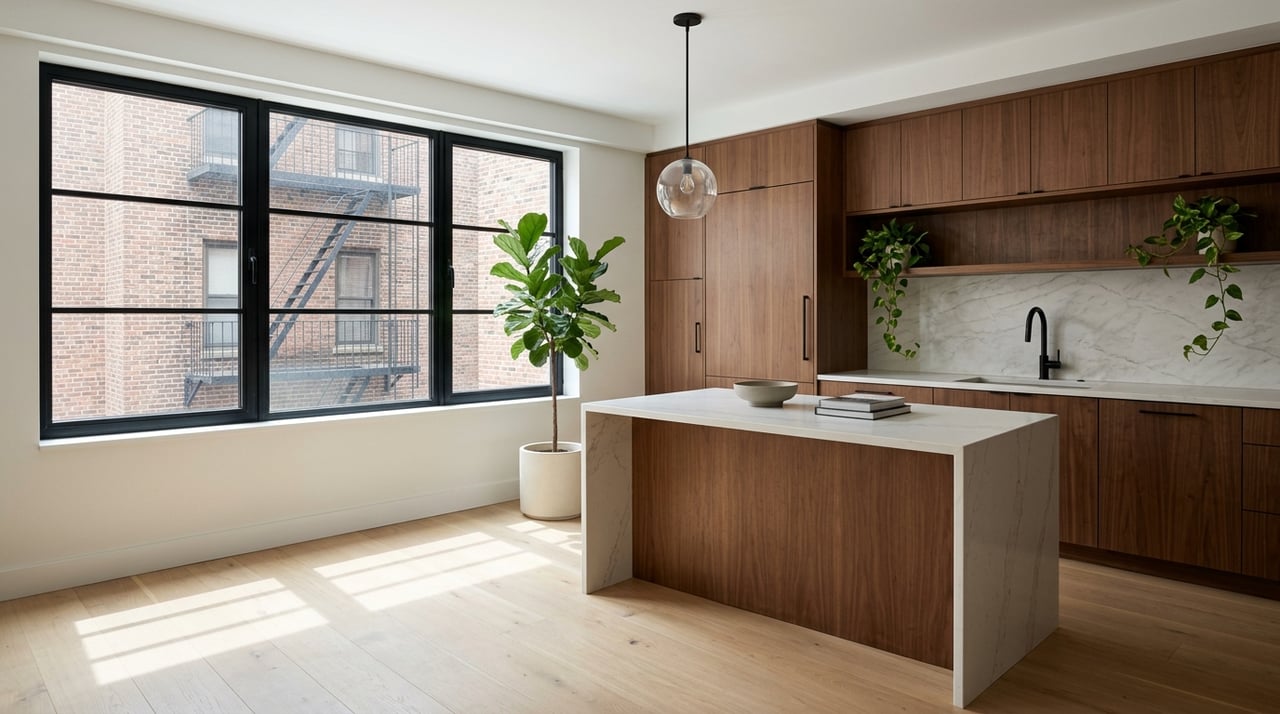
Picture yourself starting the day with coffee on a quiet Village block, crossing a park that doubles as a neighborhood commons, and ending the evening with a film or small-scale theater performance a short walk from home. If you are thinking about living in Greenwich Village, that daily rhythm often matters as much as any floor plan. A closer look at how the neighborhood moves from morning to night can help you decide whether its pace, texture, and housing feel are the right match for you. Let’s dive in.
Greenwich Village does not read like one long corridor with a single center. It is better understood as a collection of smaller routines, with each pocket offering a slightly different feel from the next. That block-by-block variation is part of what future locals tend to notice first.
The neighborhood’s street pattern helps create that feeling. Unlike much of Manhattan, parts of the Village follow an older Dutch street plan rather than the city grid, and Christopher Street is the oldest street in the Village. As you walk here, the turns, angles, and shorter sightlines can make even a familiar route feel more personal and less predictable.
Historic context also shapes the experience. The Greenwich Village Historic District was designated in 1969 and includes more than 2,000 buildings across 65 blocks, making it the largest historic district in New York City. That preservation record helps explain why so many streets feel low-rise, contextual, and visually distinct.
A Village morning often begins on foot. Stumptown’s café at 30 West 8th Street opened in 2013 in the former Eighth Street Bookshop, a site tied to the area’s literary past. That kind of layered history is common here, where even a coffee stop can feel connected to a deeper neighborhood story.
Another classic morning reference point is Caffe Dante on MacDougal Street, which first opened in 1915. Its long presence in the neighborhood reflects the older, lived-in feel that many buyers associate with the Village. Rather than rushing through the block, you tend to notice the storefronts, the scale of the buildings, and the steady mix of regulars, students, and visitors.
From there, Washington Square Park often becomes the natural next stop. The park spans 9.75 acres and serves as a dynamic commons used by locals, students, performers, chess players, activists, and visitors. The arch and fountain anchor the space, but the park’s real appeal is the way it supports everyday life at many speeds.
If you are evaluating Greenwich Village as a place to live, this matters. A neighborhood park is not just scenery. It becomes part of how you start the day, meet people, take a break, or reset between work and home.
The blocks around the park also carry the daily pulse of NYU. The university identifies Washington Square Park as the heart of its campus, with buildings like Bobst Library, the Kimmel Center, and student residences around the perimeter. That gives parts of Greenwich Village an active, mixed-use quality that feels very different from a purely residential enclave.
For future locals, that can be either a draw or a consideration. Some buyers love the steady movement, retail activity, and daytime energy. Others prefer to focus their search on quieter side streets a few blocks away while still keeping the park and transit access close.
By midday, the Village often shifts into a slower rhythm. Jefferson Market Library is one of the clearest examples of that change in pace. Located at 425 Avenue of the Americas, the building began as a courthouse constructed between 1875 and 1877 and was designed in a Victorian Gothic style by Frederick Clark Withers and Calvert Vaux.
Its clock tower remains one of the neighborhood’s most recognizable landmarks. The library also maintains archival material on Jefferson Market and Village history, which reinforces how closely everyday life and preservation are tied together here. Even if you are simply walking by, the building gives the neighborhood a strong sense of continuity.
Around this part of the day, Greenwich Village feels especially well suited to wandering rather than rushing. The older street plan, smaller blocks, and varied building stock create a sense of discovery that is harder to find in more uniform parts of Manhattan. You do not need a perfect itinerary to understand the appeal.
This is also where the housing context becomes easier to read. Based on the historic district record and preservation guidance, the most reliable way to describe the area’s homes is as a mix of landmarked townhouses, rowhouses, prewar apartments and co-ops, and low-rise conversions, with the exact mix changing from block to block. The western and southern edges also reflect a history of row houses, later tenements and apartment buildings, warehouses, stables, and older buildings converted into apartments.
If you continue west, the Christopher Street area brings one of the neighborhood’s most important historical dimensions into focus. Stonewall National Monument is a 7.7-acre site centered on Christopher Park, the Stonewall Inn, Christopher Street, and the surrounding blocks. It is one of the strongest reminders that Greenwich Village is not only residential and cultural, but also central to major civic and civil-rights history.
The surrounding area is one of the Village’s most layered pockets. Public space, brick buildings, and the irregular street pattern all contribute to a setting that feels intimate while carrying national significance. Christopher Park also serves as one of the only public open spaces west of Sixth Avenue in Greenwich Village, which adds practical everyday value to its historical importance.
This part of the Village also answers a common question: is Greenwich Village all one vibe? Not really. Washington Square is more park- and campus-centered, MacDougal and the South Village often feel older and more intimate, and the Christopher Street area carries a distinct historical identity shaped by public space and civic memory.
That variety is one reason many buyers stay focused on individual blocks, building types, and walking patterns rather than judging the neighborhood as one uniform whole. In Greenwich Village, a few minutes of walking can noticeably change the experience.
As evening arrives, the Village leans into culture in a way that feels embedded rather than staged. IFC Center, which opened in 2005 after the renovation of the historic Waverly Theater, now includes five cinemas and is known for independent and documentary premieres, DOC NYC programming, queer-cinema series, and midnight cult films. It is the kind of venue that supports a regular local routine, not just a special occasion outing.
Its location also reinforces a car-light lifestyle. The theater is served by the West 4th Street/Washington Square and Christopher Street/Sheridan Square subway stops, which makes it easy to fold a movie into an ordinary weekday evening. For many future residents, that level of convenience is part of the appeal of living here.
Cherry Lane Theatre offers a different but equally local evening note. Founded in 1923, it is identified as New York’s oldest Off-Broadway theater, with its current home on Commerce Street in the West Village. For someone considering the area, that says a lot about how culture shows up here.
In Greenwich Village, the evening is often less about large venues and more about places woven into the fabric of the blocks around them. That supports a lifestyle where dinner, a performance, and the walk home can all feel connected.
Greenwich Village is one of those places where your daily route matters. The non-grid layout, smaller pockets of activity, and mix of park, campus, civic, and cultural spaces mean you experience the neighborhood best on foot. If you value discovery, short walks, and streets that do not all feel interchangeable, this is a meaningful advantage.
For buyers, the housing stock is part of the draw. The area is best understood as a mix of historic townhouses, rowhouses, prewar co-ops and apartments, and low-rise converted buildings rather than a tower-dominant neighborhood. That can create a more textured residential experience, but it also means your search often benefits from close attention to each building and each block.
A day in Greenwich Village suggests a certain kind of living. You may be choosing it for the ability to walk to coffee, spend time in a real neighborhood park, move through historically layered streets, and end the day with film or theater close to home. For many buyers and renters, that daily pattern is the value proposition.
If you are considering a move here, it helps to look beyond listing photos and ask how you want your day to feel. In Greenwich Village, that answer can tell you a lot.
Whether you are searching for a co-op, condo, townhouse, or a discreet off-market opportunity in Manhattan, working with an advisor who understands block-level nuance can make the process clearer. If you want tailored guidance on Greenwich Village and nearby Manhattan neighborhoods, connect with Charlar Acar.
Stay up to date on the latest real estate trends.
September 17, 2026

Lifestyle
Charlar Acar | September 10, 2026
September 3, 2026

Luxury Real Estate
Charlar Acar | August 27, 2026
August 27, 2026
Lifestyle
Charlar Acar | August 13, 2026
August 13, 2026
August 6, 2026
Lifestyle
Charlar Acar | July 23, 2026
For more than 6 years as an ABR, he has merited the trust of his clients and the respect of his colleagues in the real estate industry. He keeps confidences and represents each party with the highest level of service while bringing intelligence and skill to each transaction, large or small.