
Charlar Acar | May 7, 2026
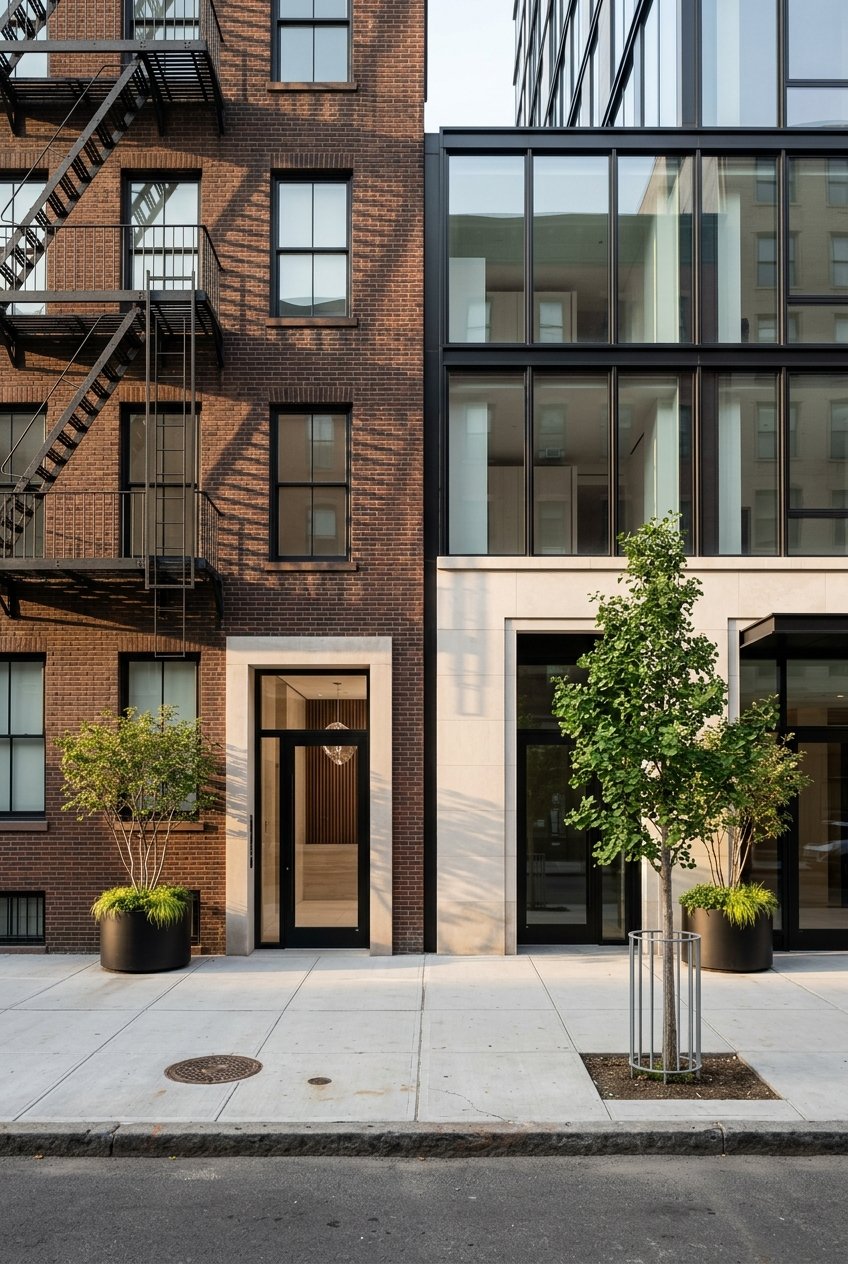
If you still picture the Financial District as a place that shuts down after market close, it may be time for a reset. Today, FiDi is much more than a daytime business center, and that matters if you are thinking about buying, renting, or investing in Lower Manhattan. This guide walks you through what daily life looks like now, from housing and transit to outdoor space and neighborhood energy, so you can decide whether FiDi fits the way you want to live. Let’s dive in.
The clearest change in the Financial District is simple: more people live here now. A Manhattan Community Board 1 neighborhood breakdown found that the Financial District had 21,386 residents in 2020, which was up by 6,669 from 2010. That growth reflects a neighborhood that is no longer built only for office workers.
Across the wider Community Board 1 district, the 2020 census materials show 78,390 residents and 41,977 housing units. That larger context matters because FiDi functions as part of a broader Lower Manhattan ecosystem that includes Battery Park City, Civic Center, Greenwich South, Seaport, and Tribeca. In practical terms, you are living in an area that supports both weekday business activity and full-time residential use.
A big reason for that shift is conversion. The New York City Department of Housing Preservation and Development reports that since 1995, about 20 million square feet of Financial District office space has been converted into roughly 17,000 homes. That long-running trend helps explain why FiDi feels different from many other Manhattan neighborhoods.
If you are comparing FiDi to a classic brownstone area, the housing stock will feel noticeably different. Many homes are in former office buildings or larger residential towers rather than low-rise streetscapes. You often see layouts, amenities, and building designs shaped by adaptive reuse rather than traditional neighborhood development.
That can be a real advantage if you like full-service buildings, elevators, attended lobbies, and modern shared amenities. It also means the feel of one building can vary a lot from the next, depending on when it was built, whether it was converted, and how well the building is managed. In FiDi, building-level analysis matters as much as neighborhood-level analysis.
Older office buildings have played an especially important role. HPD notes that pre-1977 office buildings in the Financial District have access to the most permissive conversion zoning, which helps explain the number of loft-like homes and former office buildings now used as apartments. For buyers, that can mean more variety in layout, ceiling height, and architectural character than you might expect.
The transition is still happening. In February 2026, the Downtown Alliance reported that 14 new residential conversion projects had been announced in Lower Manhattan over the prior two years, accounting for at least 3,200 units. That same report said the area’s residential population had risen above 70,000 for the first time.
One of FiDi’s biggest strengths is how easy it can be to move around the city. The MTA says Fulton Center integrates five subway stations serving nine lines, making it one of the most connected parts of Manhattan. If you commute often, meet clients around the city, or simply do not want to rely on a car, that level of access can change your daily routine in a very real way.
There are also water-based transit options that add flexibility. NYC DOT describes the Staten Island Ferry from Whitehall Terminal as a free, 24/7, year-round service between Lower Manhattan and St. George. DOT also notes the Wall Street/Pier 11 landing on the NYC Ferry system, giving residents another commuting and travel option.
For many residents, that convenience is part of the lifestyle appeal. You can get uptown, to Brooklyn, or across the harbor with relative ease. In a city where time and predictability matter, FiDi’s transit network is one of its strongest selling points.
FiDi is not defined by private gardens or long stretches of townhouse blocks. Instead, its outdoor life is tied closely to the waterfront and public open space. That gives the neighborhood a very different rhythm from other residential parts of Manhattan.
The Battery is one of the area’s major anchors. NYC Parks describes it as a 21.88-acre neighborhood park with public restrooms, Wi-Fi hotspots, eateries, waterfront gardens, and the SeaGlass Carousel. It is also a natural place for walks at the southern tip of Manhattan.
The East River Waterfront Esplanade adds another layer to that experience. NYC Parks identifies it as an 8.76-acre waterfront park running along FDR Drive between Broad Street and Pier 36. For residents, spaces like these provide room to walk, reset, and get outdoors without leaving Lower Manhattan.
That said, the waterfront is also part of a larger resilience effort. The city’s Financial District and Seaport Climate Resilience Master Plan outlines a nearly one-mile project from The Battery to the Brooklyn Bridge that includes an elevated shoreline, accessible pathways, new open spaces, and resilient ferry terminals. So while the waterfront remains a major amenity, it is also an area where planning, change, and construction are part of the current reality.
One of the biggest lifestyle shifts in FiDi is what happens after business hours. The neighborhood now has more reasons for people to stay, dine, and spend time locally on evenings and weekends. That adds a level of consistency that older views of the district often miss.
The Downtown Alliance reported that 2025 saw 90 retail openings in Lower Manhattan, many of them in food and beverage. That kind of activity supports a neighborhood that functions year-round, not just from Monday to Friday. For residents, it means more everyday options close to home.
Stone Street is a clear example. Its official site describes it as a pedestrian-only street lined with restaurants and bars, known for outdoor dining and a long nightlife history. If you want a social pocket with a distinct downtown feel, this is one of the neighborhood’s most recognizable settings.
The Tin Building on South Street adds a different kind of appeal. It operates as a food-and-market destination with restaurants, bars, coffee, pastries, and market shopping at 96 South Street. For residents, destinations like this help round out the neighborhood beyond office towers and commute routes.
FiDi is still not what most people would call a traditional arts district. Even so, it offers more weekend and cultural activity than many buyers expect. That can make the neighborhood feel more layered and more livable.
The South Street Seaport Museum is one example. According to the museum, it offers exhibitions, historic ships, a letterpress print shop, and walking tours connected to New York’s history as a port city. Those kinds of institutions bring a steady flow of local activity that supports the neighborhood’s residential feel.
For many buyers, this is the real story of FiDi now. It is not trying to become a copy of the West Village or Tribeca. Instead, it is becoming a dense, transit-rich, waterfront neighborhood with its own rhythm, shaped by conversions, large buildings, public infrastructure, and a growing mix of food and cultural destinations.
Community Board 1’s district needs statement offers a useful look at what people in Lower Manhattan continue to prioritize. The report says residents, workers, tourists, and students most often called for more affordable housing, more parks and open space, better mobility and pedestrian conditions, and fewer issues tied to construction, noise, garbage, and overcrowded sidewalks. Those concerns help explain what day-to-day living here really feels like.
In FiDi, quality of life often comes down to details. You may care less about front-yard charm and more about lobby staffing, package handling, elevator reliability, cleanliness, and how a block feels early in the morning, late at night, or on a weekend. These are practical questions, and they matter when you are evaluating a purchase or rental in a high-density neighborhood.
That is why building choice is so important here. Two homes at a similar price point can offer very different living experiences depending on street activity, exposure, amenities, and management quality. In FiDi, the right fit is often less about the neighborhood in general and more about the exact building and micro-location.
The Financial District can work especially well if you value convenience, connectivity, and full-service urban living. It may appeal to you if you want quick transit access, a downtown setting, and housing options that include converted loft-style spaces or modern towers. It can also make sense if you like being near waterfront paths, dining hubs, and major transportation links.
At the same time, FiDi is not the right match for everyone. If your ideal neighborhood centers on quieter side streets, smaller-scale architecture, or a more traditional residential layout, you may find the area more commercial in feel than you want. The best decision usually comes from matching your daily habits to the exact building and block, not just the neighborhood name.
For buyers and investors, that is where careful guidance becomes especially valuable. In a neighborhood defined by conversions, ongoing development, and meaningful building-to-building differences, local insight can help you avoid broad assumptions and focus on what truly fits your goals.
If you are considering a move, purchase, sale, or investment in Lower Manhattan, Charlar Acar offers discreet, highly tailored guidance backed by deep Manhattan experience, strong building-level knowledge, and a polished, hands-on approach.
Stay up to date on the latest real estate trends.
October 15, 2026

Market Update
Charlar Acar | October 10, 2026
Supply Is Still Tight. Buyers Are Discerning. Luxury Continues To Outperform
October 8, 2026
October 1, 2026
Market Update
Charlar Acar | September 25, 2026

Homebuyers
Charlar Acar | September 25, 2026
September 24, 2026
September 17, 2026

Lifestyle
Charlar Acar | September 10, 2026
For more than 6 years as an ABR, he has merited the trust of his clients and the respect of his colleagues in the real estate industry. He keeps confidences and represents each party with the highest level of service while bringing intelligence and skill to each transaction, large or small.