
Charlar Acar | April 23, 2026
Lifestyle
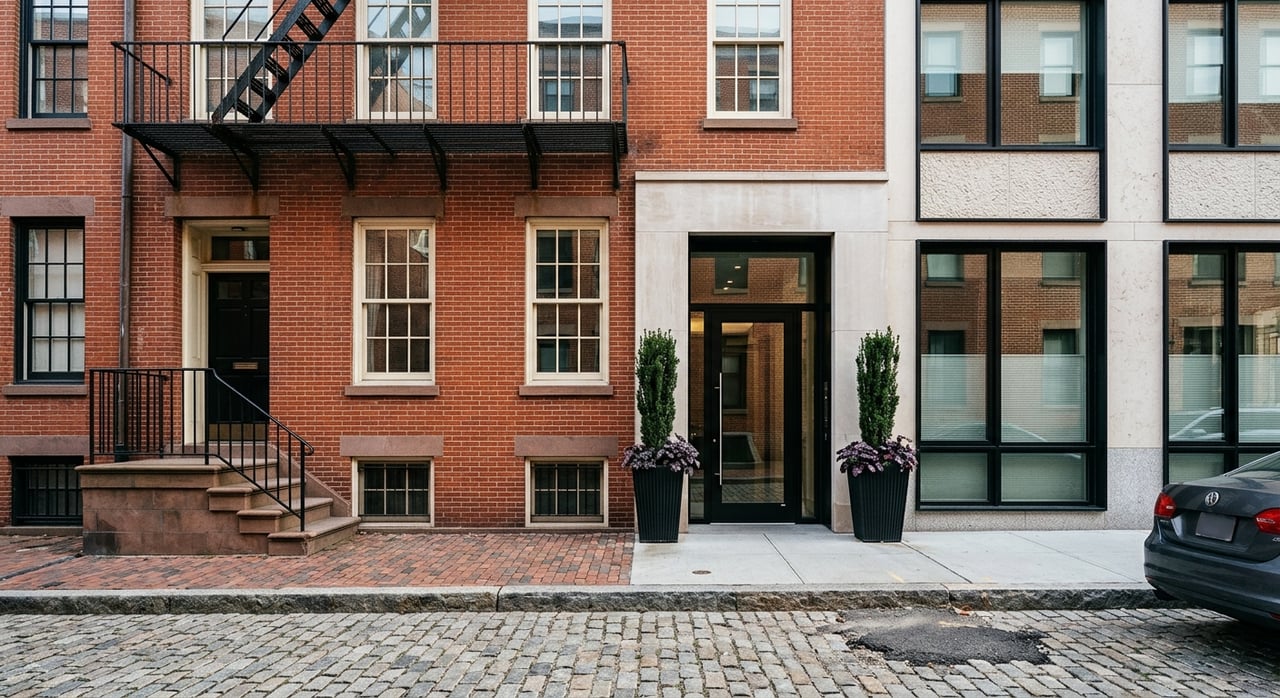
If you want downtown Manhattan energy without the scale of a tower district, Nolita often stands out fast. It feels compact, design-conscious, and highly walkable, which is exactly why many buyers and renters keep it on their shortlist. At the same time, it comes with real tradeoffs around space, price, and parks. This guide breaks down what living in Nolita is actually like, so you can decide whether it fits your lifestyle. Let’s dive in.
Nolita is a small Lower Manhattan neighborhood within Community Board 2, and its identity is closely tied to its compact, low-rise streetscape. In the city’s planning record, the area is described as overwhelmingly mixed-use, with mostly four- to six-story residential buildings and ground-floor retail that shapes daily street life. That built form is a big reason Nolita feels more intimate than many other parts of Manhattan.
Rather than reading like a high-density tower zone, Nolita fits into a tighter downtown framework surrounded by neighborhoods like Little Italy, SoHo, and NoHo. Community Board 2, which includes Nolita and several nearby downtown neighborhoods, had an estimated population of 92,445 in the 2020 Census, according to the Manhattan Community Board 2 statement. For you as a resident, that usually translates to a neighborhood that feels local in scale, even though it sits in the middle of a major urban core.
The short answer is both, but in a very specific downtown-Manhattan way. The neighborhood is heavily mixed-use, so residential life and retail activity are woven together block by block rather than separated into distinct zones.
According to the city’s SoHo/NoHo environmental review, Nolita is known for boutiques, cafés, and restaurants at street level. That means you are likely to experience the neighborhood through storefronts, corner dining spots, and consistent foot traffic, instead of long stretches of purely residential blocks.
Even so, Nolita is not just a shopping or dining district. The same planning record points to everyday neighborhood anchors like DeSalvio Playground, the Elizabeth Street Community Garden, St. Patrick’s Old Cathedral, the Mulberry Street Branch library, and an FDNY firehouse. Those elements help support daily residential life in a neighborhood that can otherwise look highly lifestyle-driven from the outside.
If you are picturing rows of full-service glass towers, Nolita is probably not what you expect. The neighborhood is mostly defined by low-rise residential buildings, often with retail on the ground floor, which gives the housing stock a more boutique feel.
The city describes Nolita and nearby corridors as a mix that can include tenements, federal-style row houses, historic cast-iron lofts, newer residential buildings, and low-rise retail structures in the broader area. In practical terms, that means you are more likely to encounter small-format condos, conversions, and character-driven buildings than a large supply of amenity-heavy high-rises. The inventory tends to feel curated rather than standardized.
There are also signs of gradual evolution. The planning record notes that some lower-intensity retail and parking uses along Canal Street and nearby corridors have been replaced over time, which helps explain why some newer, more design-forward residential product appears alongside older walk-up-era buildings. That does not make Nolita a new-development neighborhood, but it does mean the housing mix is not frozen in time.
Nolita is a niche downtown submarket, and the pricing reflects that. It is not a high-volume, entry-level section of Manhattan. Instead, it tends to attract buyers and renters who are specifically seeking low-rise downtown living and are willing to pay for that combination of location, scale, and street character.
Recent market trackers in the research report place median rent in the mid-$5,000s. Realtor.com market data reports a median rent of about $5.3K and a median home sale price around $3.37 million, while Zumper’s April 2026 snapshot in the research report places median rent at $5,795. Exact figures can move by source and timing, but the bigger takeaway is consistent: Nolita is premium-priced.
There is also a broader affordability context worth noting. Community Board 2 has described the district as rent-stressed, citing a 2015-2019 ACS median monthly rent of $2,311, with 39% of renters rent-burdened and 18.5% severely rent-burdened in the district. For today’s buyer or renter, that supports the idea that Nolita should be approached as a lifestyle-driven market where price sensitivity and inventory scarcity often go hand in hand.
One of Nolita’s strongest practical advantages is transit access. If your ideal Manhattan routine includes walking most places and using the subway for everything else, the neighborhood supports that well.
Nearby stations include Broadway-Lafayette St, Prince St, Spring St, and Canal St, with service depending on station from the B, D, F, M, 6, E, J, N, Q, R, W, and Z lines. The MTA subway map resources in the research report confirm how connected this part of downtown is. That broad network helps make Nolita especially appealing if you want a car-light lifestyle with flexible access to other parts of Manhattan and beyond.
For many residents, this connectivity is part of the neighborhood’s value proposition. You are choosing a small-footprint neighborhood, but not giving up the convenience of being plugged into the wider city. That can matter just as much as the architecture or dining scene when you are deciding on long-term fit.
Nolita’s charm comes with tradeoffs, and open space is one of the clearest examples. The neighborhood has pockets of public and civic space, but if you want large parks close at hand, this may feel limited.
Community Board 2’s FY2026 statement says the district has about 0.58 acres of parkland per 1,000 residents, which is well below the city standard it cites. That statistic gives useful context for what many residents experience day to day. You are getting strong street life, walkability, and neighborhood texture, but not abundant large-scale green space.
That does not make limited open space a dealbreaker for everyone. For some buyers, smaller community spaces and the convenience of downtown living are a perfectly acceptable exchange. For others, especially if outdoor access is a top daily priority, it may be a sign to compare Nolita carefully with neighborhoods that offer more park access.
Many people ask whether Nolita feels quieter than nearby areas like SoHo or NoHo. Based on the research, the clearest distinction is scale rather than a formal noise ranking. Nolita’s mostly four- to six-story built form creates a more village-like streetscape than larger, more tower-oriented sections of Manhattan.
That smaller scale can make the neighborhood feel more intimate and residential in rhythm, even though it remains active and commercial at street level. You are still in a downtown area with restaurants, boutiques, and hospitality activity, but the physical environment often reads as more compact and less monumental than nearby districts known for larger retail corridors or bigger buildings.
In other words, Nolita tends to appeal to people who want downtown convenience with a more boutique setting. If you like character, walkability, and design-conscious blocks, that balance can be a major draw.
Nolita’s future is also shaped by what is happening around it. The broader 2021 SoHo/NoHo Neighborhood Plan created the Special Soho-Noho Mixed Use District and a path to convert some JLWQA loft space to residential use, according to the NYC Buildings overview.
That rule is not specific to Nolita, but it helps explain why nearby loft and mixed-use inventory may continue to evolve. For buyers, that matters because neighborhood character and housing options are not static. Over time, adjacent policy changes can influence what comes to market and how the area develops around the edges.
Nolita is usually a strong match if you want a style-driven downtown setting, low-rise streets, and excellent transit access. It also makes sense if you value a more curated residential experience over the predictability of a large full-service tower building.
It may be less compelling if your top priorities are expansive green space, a quieter suburban-style feel, or abundant building amenities. The neighborhood’s core appeal is its compact, mixed-use, boutique character. If that is exactly what you want, Nolita can be one of downtown Manhattan’s most distinctive places to live.
If you are evaluating Nolita as a purchase, rental, or long-term investment, working with an advisor who understands boutique Manhattan inventory can make the search much more precise. Charlar Acar offers discreet, high-touch guidance for buyers, sellers, and investors navigating nuanced Manhattan submarkets.
Stay up to date on the latest real estate trends.
October 15, 2026

Market Update
Charlar Acar | October 10, 2026
Supply Is Still Tight. Buyers Are Discerning. Luxury Continues To Outperform
October 8, 2026
October 1, 2026
Market Update
Charlar Acar | September 25, 2026

Homebuyers
Charlar Acar | September 25, 2026
September 24, 2026
September 17, 2026

Lifestyle
Charlar Acar | September 10, 2026
For more than 6 years as an ABR, he has merited the trust of his clients and the respect of his colleagues in the real estate industry. He keeps confidences and represents each party with the highest level of service while bringing intelligence and skill to each transaction, large or small.