
Charlar Acar | June 25, 2026
Lifestyle
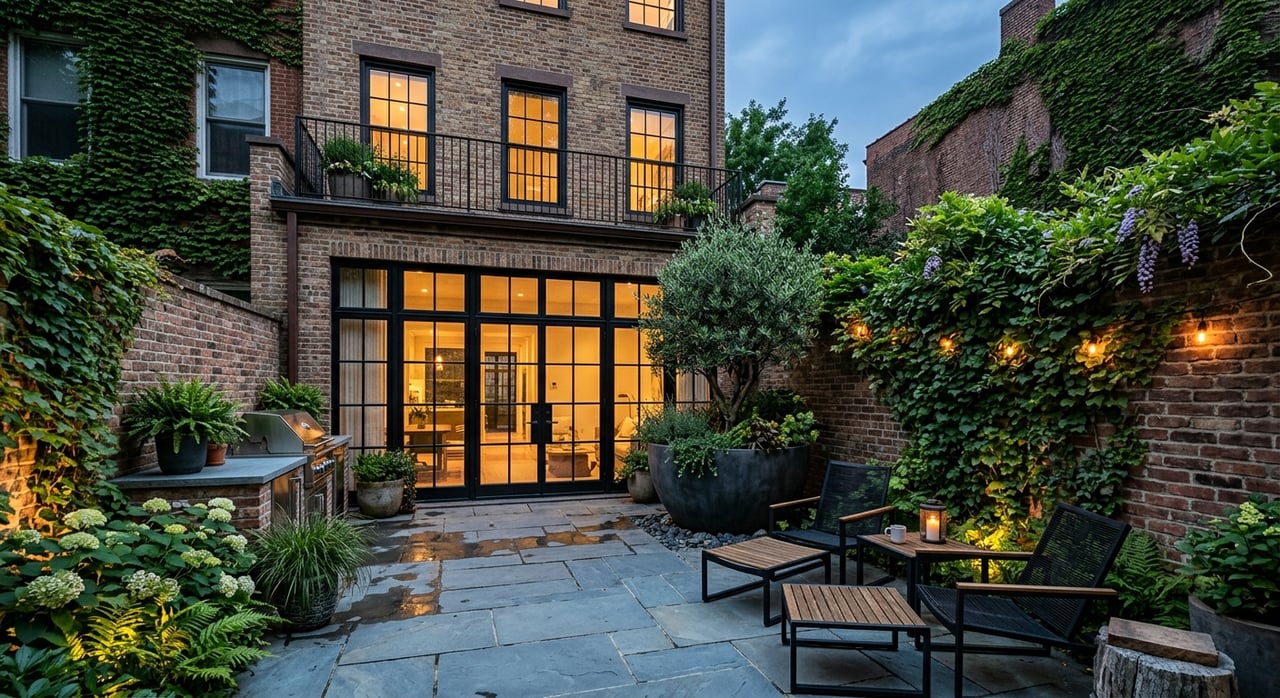
If you have ever wondered whether townhouse living in Manhattan can still feel private, grounded, and distinctly residential, the West Village is one of the clearest examples that it can. This is a part of the city where a separate front door, historic streetscape, and quick access to the waterfront can exist in the same daily routine. If you are considering a West Village townhouse, it helps to understand not just the romance of the idea, but the reality of ownership. Let’s dive in.
A West Village townhouse offers something that is increasingly hard to find in Manhattan: low-rise living in a neighborhood that still feels layered, intimate, and deeply established. According to NYC Planning, the Far West Village is predominantly residential and includes converted loft buildings, 19th-century row houses, the West Village Houses complex, and newer taller residential buildings.
That mix shapes the experience block by block. You are not living in a uniform district of towers or a single building type. Instead, townhouse ownership here comes with a streetscape that feels architecturally varied, historically rooted, and visually consistent in a way many buyers find hard to replicate elsewhere in the city.
One of the defining features of a West Village townhouse is that it is often tied to the neighborhood’s preservation framework. In the Greenwich Village Historic District Extension, the Landmarks Preservation Commission notes that roughly 45 buildings span nearly two centuries of development, from 1819 to 2003.
That long development timeline is part of what makes the area feel so distinctive. Row houses, later tenements, apartment buildings, and warehouse conversions all exist within a compact footprint, creating a neighborhood that feels both historic and actively lived in.
For you as an owner, this can mean that your home is more than a residence. It may also be part of a larger architectural story that helps preserve the look and feel of the block over time.
Townhouse ownership in the West Village is usually more hands-on than owning a condo or renting an apartment. If the property is landmarked or located within a historic district, the Landmarks Preservation Commission must approve in advance any alteration, reconstruction, demolition, or new construction affecting the designated building.
Owners are also required to keep landmarked property in good repair. At the same time, ordinary exterior repairs and most interior work usually do not require LPC approval. In practical terms, that means you get stronger protection for the facade and streetscape, but you also need to be prepared for a more detailed ownership process.
This is one of the biggest differences between admiring a West Village townhouse and actually living in one. You are buying privacy and character, but you are also stepping into a stewardship role.
For many buyers, the appeal starts with the feeling of separation from typical apartment living. A townhouse often means your own entrance, more internal separation between floors, and a stronger sense of control over how you use the space day to day.
That kind of privacy can be especially appealing if you want a home that feels quieter and more self-contained within a dense urban setting. West Village townhouse living is often a fit for buyers who value discretion, independence, and a more house-like rhythm without leaving Manhattan.
The West Village is still fully urban, but parts of it are intentionally designed to feel more residential. Because the neighborhood is included on the city’s West Village Slow Zone list, the Department of Transportation says speed limits are reduced from 25 mph to 20 mph and traffic-calming treatments are used to reduce cut-through traffic and traffic noise.
That has a real effect on how the neighborhood feels when you walk outside your front door. The pace can feel calmer than in many dense Manhattan areas, which adds to the appeal of townhouse living for buyers who want city access without an overly rushed street environment.
One of the biggest lifestyle advantages of living in a West Village townhouse is proximity to Hudson River Park. The park’s Greenwich Village section runs from Canal Street to Gansevoort Street and includes an uninterrupted esplanade, river views, lawns, Pier 45 at the foot of Christopher Street, Pier 46 at the end of Charles Street, Pier 51, the West Village Apple Garden, a dog run, dining spaces, public art, tennis courts, and ballfields.
That kind of park access changes how the neighborhood functions in daily life. Instead of viewing outdoor space as an occasional destination, you can treat the waterfront as part of your regular routine, whether that means morning walks, time by the river, or easy access to open space on weekends.
Hudson River Park also reports more than 17 million visits a year across its four-mile stretch along Manhattan’s west side. That helps explain why it feels like such a central lifestyle feature for residents, not just a scenic edge to the neighborhood.
A common assumption is that townhouse living means giving up some convenience. In the West Village, that is usually not the case. MTA service in and around the neighborhood includes Christopher St-Stonewall on the 1 train, West 4 St-Washington Sq with A, B, C, D, E, F, and M service, and 14 St-Union Sq as a nearby hub with 4, 5, 6, and L service.
For you, that means a townhouse can still support a car-light lifestyle. You get the feel of a more private home while remaining well connected to the rest of Manhattan and beyond.
This type of home tends to work best for buyers who care deeply about privacy, historic character, park access, and a neighborhood that feels lived-in rather than tower-like. If you want a separate front door and a stronger connection to the street, a townhouse can deliver a very different experience from apartment ownership.
It is usually a weaker fit if your top priority is simplicity. Compared with a standard condo or rental, a townhouse in the West Village often involves more upkeep, more planning, and more oversight tied to historic preservation rules.
That does not make it less appealing. It simply means the right buyer is someone who values the tradeoff and sees the responsibilities as part of the ownership experience.
The West Village is not isolated or sleepy. The NYPD identifies the 6th Precinct as serving Greenwich Village and the West Village, with Christopher Street and Washington Square Park among its noted destinations, which reflects how active and central the neighborhood is in daily life.
That balance matters. You can live on a low-rise block with a calmer residential feel, while still being in one of Manhattan’s most recognized and connected neighborhoods.
If you are seriously exploring a West Village townhouse, it helps to focus on a few practical questions early:
These questions can help you separate the emotional appeal from the ownership reality. In a market like the West Village, that clarity matters.
At its best, living in a West Village townhouse means owning a home that combines urban privacy, waterfront access, and architectural continuity. It gives you a version of Manhattan living that feels personal and rooted, while still keeping you connected to transit, the waterfront, and daily city life.
It also asks more of you as an owner. You are not just buying square footage. In many cases, you are taking on a piece of neighborhood history and the responsibility that comes with preserving it.
If that balance sounds appealing, a West Village townhouse can offer one of the most distinctive ownership experiences in Manhattan. For discreet guidance on West Village townhouses, private opportunities, and thoughtful acquisition strategy, connect with Charlar Acar.
Stay up to date on the latest real estate trends.
October 15, 2026

Market Update
Charlar Acar | October 10, 2026
Supply Is Still Tight. Buyers Are Discerning. Luxury Continues To Outperform
October 8, 2026
October 1, 2026
Market Update
Charlar Acar | September 25, 2026

Homebuyers
Charlar Acar | September 25, 2026
September 24, 2026
September 17, 2026

Lifestyle
Charlar Acar | September 10, 2026
For more than 6 years as an ABR, he has merited the trust of his clients and the respect of his colleagues in the real estate industry. He keeps confidences and represents each party with the highest level of service while bringing intelligence and skill to each transaction, large or small.